Angeregt durch die Untersuchungen von
F. Wolfgang Bomble (2016), Persicaria-Hybriden in Aachen und Umgebung: P. x condensata (= P. maculosa x P. mitis), P. x subglandulosa (= P. hydropiper x P. minor) und P. x wilmsii (= P. minor x P. mitis), Veröff. Bochumer Bot. Ver. 8(5)
habe ich an den angegebenen und anderen Stellen nach solchen Persicaria-Hybriden gesucht, und fand einige einzelne Pflanzen der erstgenannten Hybride.
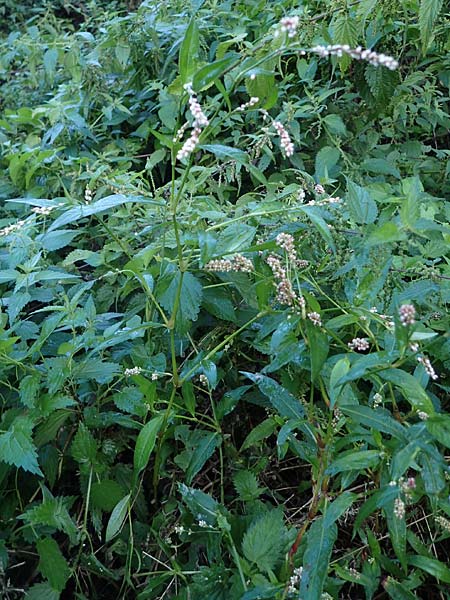
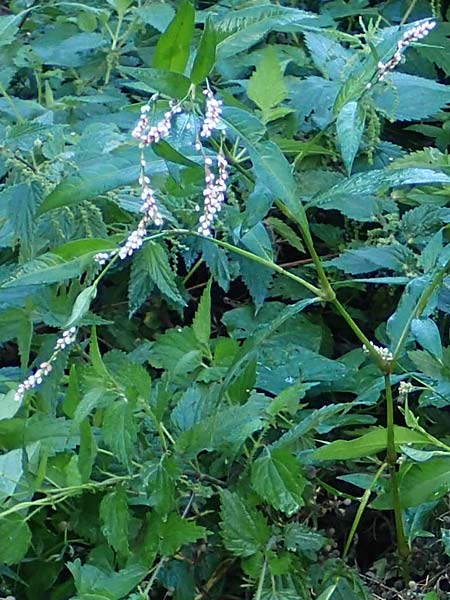
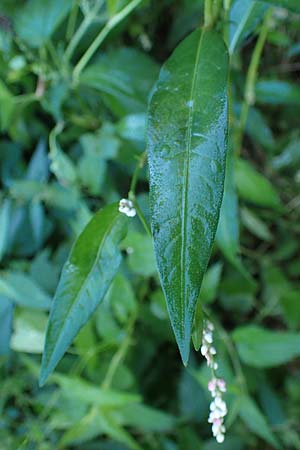
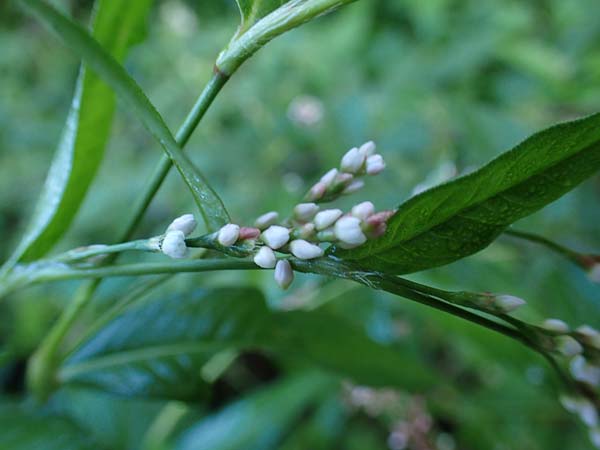
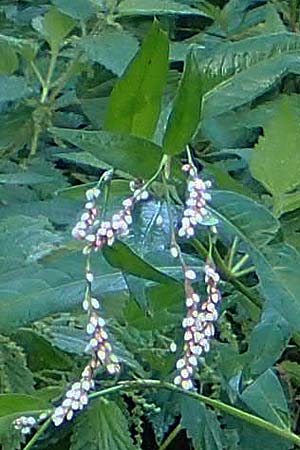
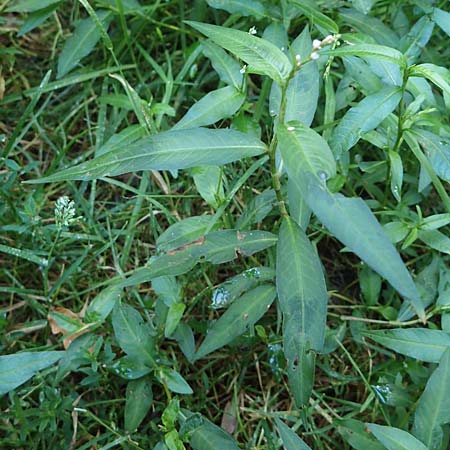
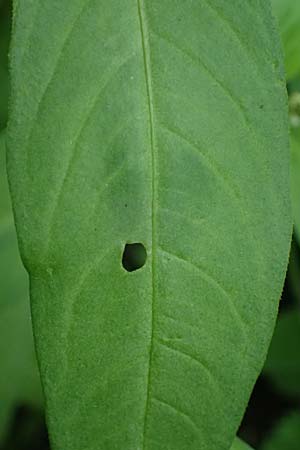
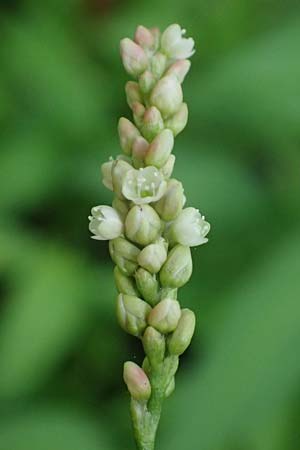
Die erste Pflanze (Fig. 1 bis 9 aus Moresnet in Belgien, nahe bei Aachen) ist höher gewachsen als der umgebende Persicaria maculosa,
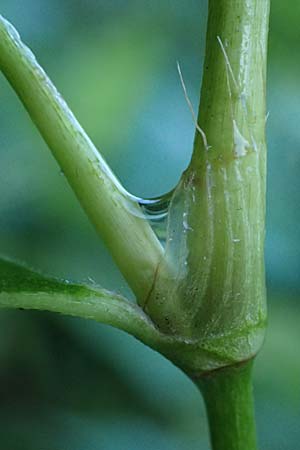
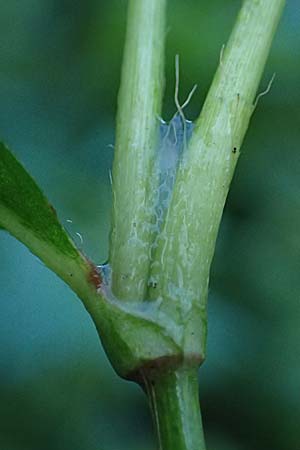
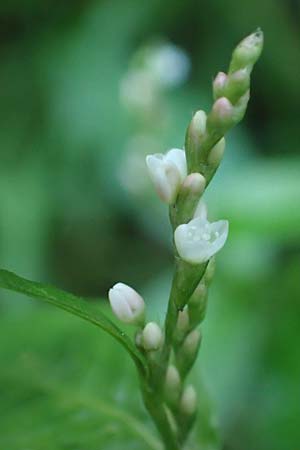
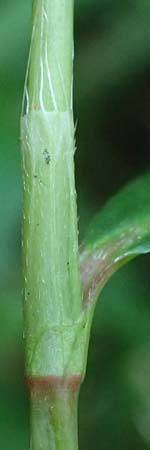
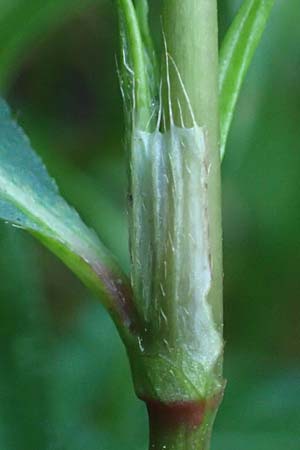
besitzt nickende Blütenstände mit vielen, vorwiegend sterilen Blüten, sowie intermediäre Blätter und Ochreae (das sind die häutigen Scheiden an den Knoten des Stängels).
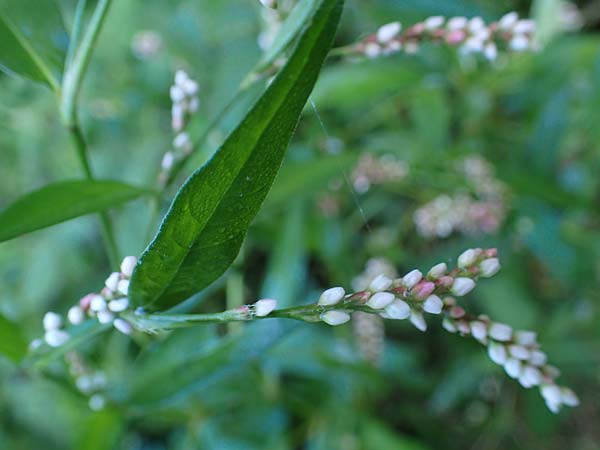
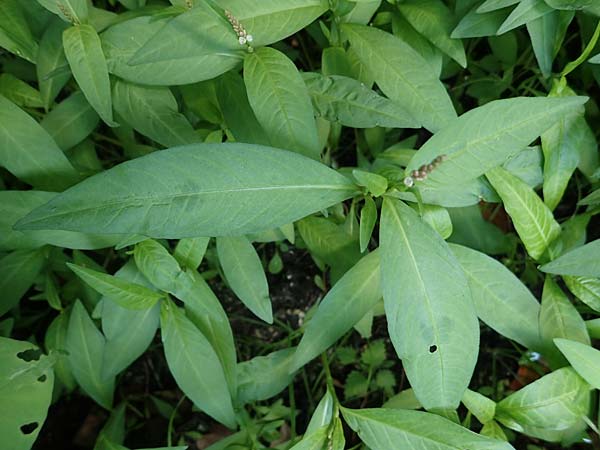
Die zweite Pflanze (Fig. 10 bis 15 aus Vaals in den Niederlanden, nahe bei Aachen) ist von niedrigem Wuchs mit einem anfangs aufrechten Blütenstand.
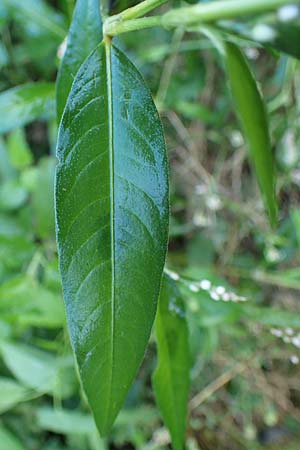
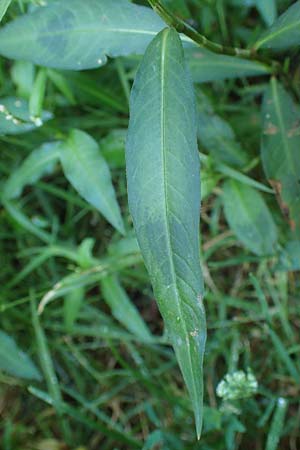
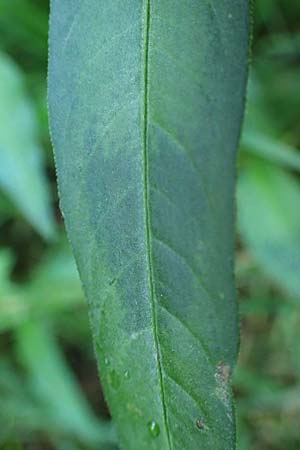
Die Blätter zeigen einen bräunlichen Rand wie bei Persicaria mitis,
aber auch einen dunklen Fleck wie bei Persicaria maculosa.
Bomble geht im o.g. Artikel Seite 39 davon aus, dass keine Persicaria mitis mit Blattflecken existiert,
sondern dass es sich beim Vorhandensein von Blattflecken immer um eine Einkreuzung von Persicaria maculosa handelt.
Die dritte Pflanze (Fig. 16 bis 18 aus Aachen) ist der vorigen ziemlich ähnlich.
Inspired by the investigations of
F. Wolfgang Bomble (2016), Persicaria-Hybriden in Aachen und Umgebung: P. x condensata (= P. maculosa x P. mitis), P. x subglandulosa (= P. hydropiper x P. minor) und P. x wilmsii (= P. minor x P. mitis), Veröff. Bochumer Bot. Ver. 8(5)
I tried to find such Persicaria hybrids at the specified and other places, and found some single plants of the hybrid mentioned first.
The first plant (Fig. 1 to 9 from Moresnet in Belgium, close to Aachen) grew taller than the surrounding Persicaria maculosa,
has nodding inflorescences with many mostly sterile flowers, as well as intermediate leaf form and ocrea (i.e. the membranous sheath at the nodes of the stem).
The second plant (Fig. 10 to 15 from Vaals in the Netherlands, close to Aachen) is of low habit with an initially erect inflorescence.
The leaves are showing a brownish edge as Persicaria mitis,
but also a dark spot as Persicaria maculosa.
In the above article on page 39, Bomble assumes that Persicaria mitis with leaf spots does not exist,
and that the presence of leaf spots is always a sign of a cross-breeding with Persicaria maculosa.
The third plant (Fig. 16 to 18 from Aachen) is rather similar to the previous one.
|
 Persicaria x condensata (F.W.SCHULTZ) SOJAK